Cottage food laws: what studies of home-kitchen businesses report
A legal survey of all 50 states, a producer survey and an economic study of business counts describe a patchwork of rules and a field of mostly small operations.
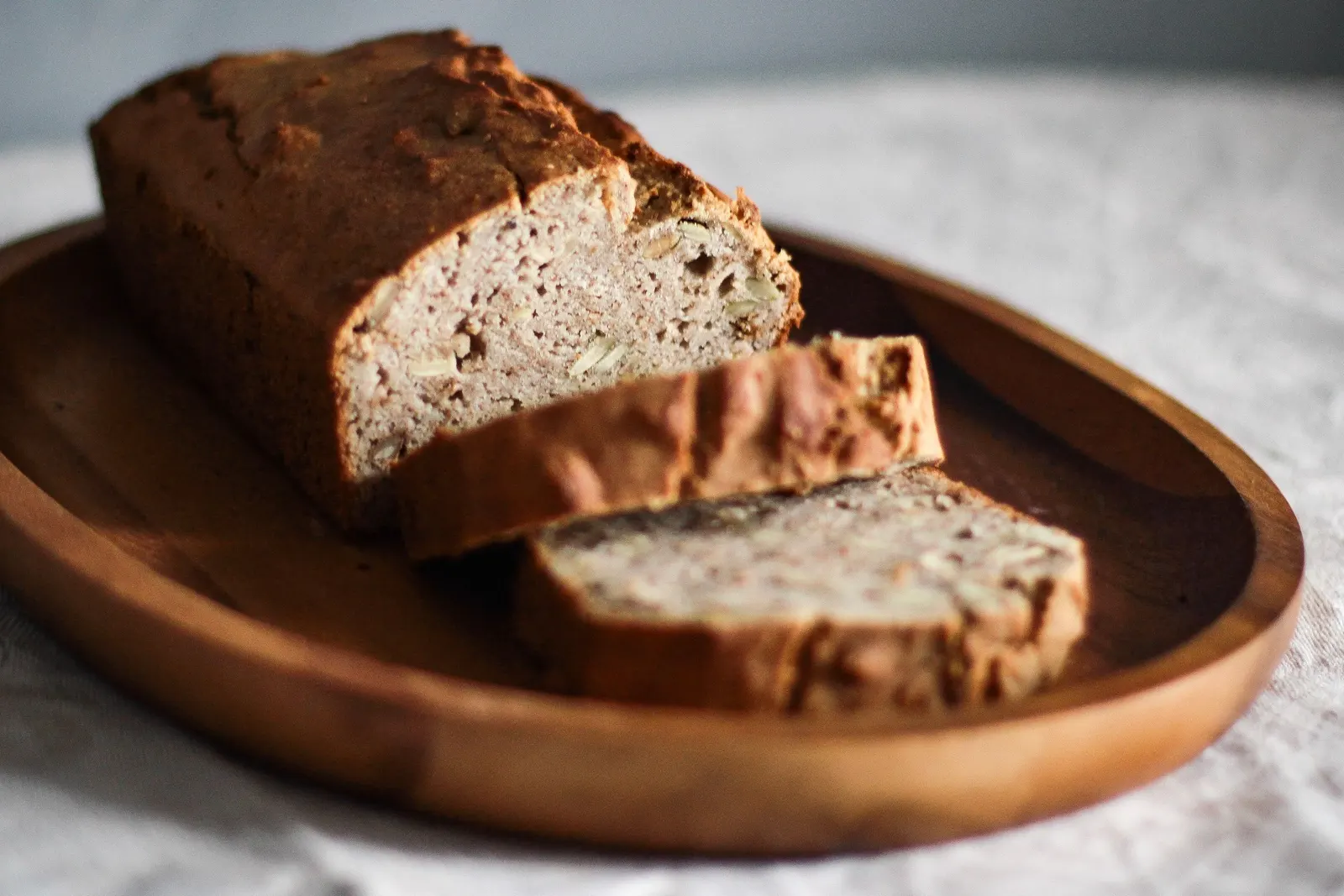
Food sold to the public in the United States generally has to come from a licensed, inspected facility. Cottage food laws carve out an exception for certain low-risk foods, typically baked goods, jams and other items that do not need refrigeration, allowing them to be made in a home kitchen and sold directly to consumers. The rules differ sharply from state to state, and a small body of research has tried to describe who uses them and what difference they make.
A patchwork of rules
The Harvard Law School Food Law and Policy Clinic published a 50-state review, Cottage Food Laws in the United States, in August 2018. Its authors, Christina Rice, Emily Broad Leib and Ona Balkus, working with student contributors, counted 49 states and the District of Columbia allowing some form of cottage food sales. They grouped the variation into a few dimensions: which products are allowed, where they may be sold, whether registration, permits or inspections are required, how products must be labeled, and whether total sales are capped.
The report treated sales caps as a trade-off. A cap limits the potential harm if a home operation causes illness, but a low cap also keeps producers from growing. The clinic recommended simple, free or low-cost registration systems, partly because without a registry a state cannot track illness or even estimate how many producers it has. It updated its state table in December 2021.
Who registers to sell
Jennifer McDonald, a researcher at the Institute for Justice, produced the first broad survey of producers. The polling firm WPA Intelligence drew on lists of registered cottage food producers from state, county and local agencies in 25 states and, between March and April 2017, completed 775 interviews in 22 states, mostly by telephone. The results were weighted to match the distribution of registered producers across states.
Respondents were 83 percent female, and 55 percent lived in rural areas, compared with about 19 percent of the national population. The typical business was small: producers reported median sales of $2,000 and median profits of $500 for 2016, a median of $500 in startup capital, and an average of about 15 hours of work a week. Most described the business as a supplemental occupation or a hobby.
McDonald's peer-reviewed analysis of the same data appeared in Food Policy in 2019. Its regression models suggested that restrictive state rules may hold back business plans among rural producers in particular.
Several cautions apply. The survey reached only producers in states that require registration, so people in lightly regulated states, or selling outside the law, are absent. The Institute for Justice is a public-interest law firm that litigates against restrictive cottage food rules, and its report closes with recommendations in that direction. The data are cross-sectional, so they describe associations rather than effects of the laws.
Testing the effect of the laws
A different approach comes from Jeffrey O'Hara, Marcelo Castillo and Dawn Thilmany McFadden, whose study in Applied Economic Perspectives and Policy used state-level panel data and a difference-in-differences design. They estimated how the number of baked-goods manufacturing businesses changed after states adopted cottage food laws, and reported a positive effect on both employer and nonemployer businesses, proportionally larger for nonemployers.
This design gets closer to cause and effect than a one-time survey. It still depends on how businesses are classified in federal statistics and on the assumption that states adopting the laws would otherwise have followed the same trend as states that did not. It also measures counts of establishments, not their earnings or how long they last.
What remains unmeasured
The Institute for Justice report argues that there is little evidence of harm from lightly regulated states, but none of these studies was designed to measure illness rates directly, and the Harvard clinic pointed to missing registration data as one reason the question is hard to settle. What the research does describe is a field of mostly small, part-time operations whose shape depends heavily on state rules.
Sources
- Rice, C., Broad Leib, E., & Balkus, O. (2018). Cottage food laws in the United States. Harvard Law School Food Law and Policy Clinic. https://chlpi.org/wp-content/uploads/2013/12/FLPC_Cottage-Foods-Report_August-2018.pdf
- McDonald, J. (2017, updated 2018). Flour power: How cottage food entrepreneurs are using their home kitchens to become their own bosses. Institute for Justice. https://ij.org/wp-content/uploads/2017/12/Cottage-Foods-Report-Sep-2018.pdf
- McDonald, J. (2019). The relationship between cottage food laws and business outcomes: A quantitative study of cottage food producers in the United States. Food Policy, 84, 21–34. https://doi.org/10.1016/j.foodpol.2019.01.012
- O'Hara, J. K., Castillo, M., & Thilmany McFadden, D. (2021). Do cottage food laws reduce barriers to entry for food manufacturers? Applied Economic Perspectives and Policy, 43(3), 935–951. https://doi.org/10.1002/aepp.13047
This article is general educational content published by Porch Works. It is not professional advice and does not describe or assume anything about any individual reader. See the disclaimer.